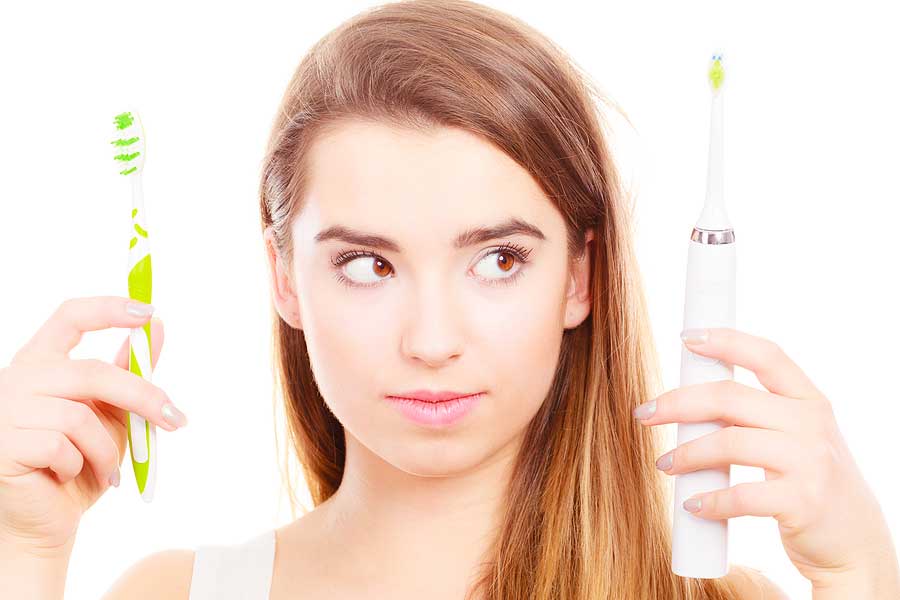
Even if brushing your teeth may not be the highlight of your day, it is an essential part of your oral hygiene. But does it matter the kind of brush you use? Manual toothbrushes are the classics, but is it worth it to upgrade to an electric one?
Plaque-Fighting Powerhouses
Electric toothbrushes don’t just scrub—they vibrate, oscillate & rotate at speeds much faster than your wrist can move. This rapid motion helps dislodge plaque more effectively than manual brushing. Many studies, including one from a 2014 Cochrane Review, show that electric brushes reduce plaque by about 21% & gingivitis by about 11% compared to manual brushing over time.
Plaque typically does not only sit on teeth, but it also sticks along the gumline. The oscillating or sonic motion of the electric brush helps pick at those areas more effectively, reducing inflammation & improving overall gum health.
Built-In Timer
While a manual brush is simply just a tool for brushing, most electric toothbrushes come with timers & sometimes even pressure sensors! These features help ensure that you brush properly for the entire dentist-recommended 2 minutes.
Typically, the 2 minutes are also broken into 4 segments of 30 second intervals, with a short buzz after every 30 seconds. This is to help ensure every quadrant of your mouth is getting an adequate amount of attention—the 30 second marker buzz indicates that it is time to move onto the next quadrant of your mouth.
Meanwhile, the pressure sensors are in place to help you avoid brushing too hard (which can damage enamel & gums) while still cleaning effectively.
Effortless for Every Hand
Another great benefit of an electric toothbrush is the ease of use. Because the brush does most of the motions, users do not need precise manual technique to get a thorough cleaning. It standardizes the brushing motion & reduces the risk of uneven cleaning or missed spots.
This makes them an especially helpful tool for people with arthritis or limited mobility, kids (or even adults) who are either lazy with or like to speedrun their brushing & anyone who is not as detail-oriented with their technique. Instead of having to maneuver and use effort, you simply have to guide the brush & let the technology handle the precision.
Sustainability Points
Instead of tossing out your toothbrush every couple of months, many electric models allow you to replace just the head. This helps lead to less plastic waste over time.
Electric toothbrushes do come with a few caveats: they cost more upfront, require charging & can feel a bit strange at first. But for many people, the improved results & ease of use outweigh the downsides. A manual toothbrush used correctly will still get the job done well, but electric brushes make good brushing habits easier…& better results more likely.
Sources
https://www.dentalhealth.org/electric-vs-manual-toothbrushes-plaque-and-gingivitis-control?Title=electric-vs-manual-toothbrushes-plaque-and-gingivitis-control
https://health.clevelandclinic.org/should-i-be-using-an-electric-toothbrush
https://www.healthline.com/health/dental-and-oral-health/electric-toothbrush-vs-manual#electric-pros